
Reading a Tape Measure (Fractional ↔ Decimal Algebra)
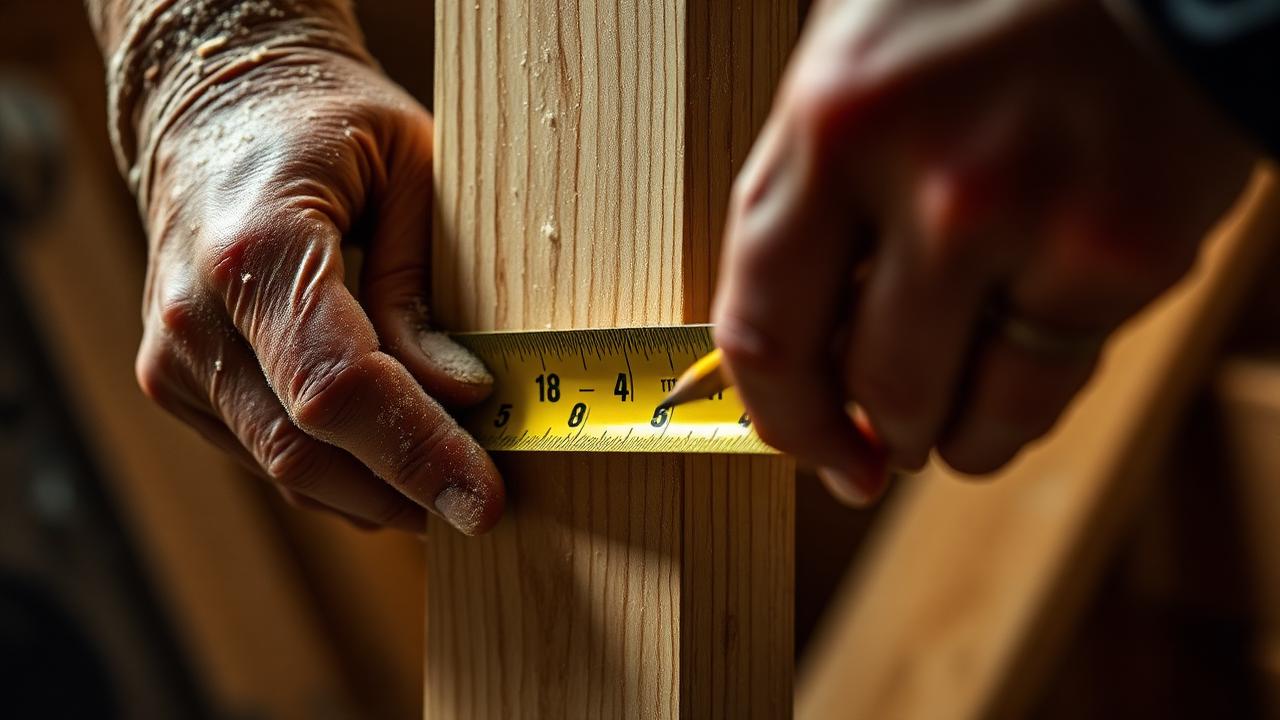
Marcus is hanging upper cabinets. The blueprint calls for a 27 5/8" filler strip. Cut it wrong and the crown molding above won't line up — a $400 mistake.
- 25-ft tape measure (with 1/16" ticks)
- Sharp pencil
- Speed square
- Cut list from the blueprint
- 1
Read the tick hierarchy
Longest tick = inch. Next = 1/2". Then 1/4", 1/8", and the tiniest = 1/16". Count ticks past the last inch.
- 2
Convert the fraction to ticks
5/8" = 10/16" → count 10 tiny ticks past the 27" mark. Mark with a sharp V, not a dot.
- 3
Burn an inch (pro tip)
If the tape hook is bent, slide it to the 1" line, measure, then subtract 1. Repeatable to 1/32".
- 4
Measure twice, cut once
Re-pull the tape from the opposite end. If both reads match, send it to the saw.
The lead carpenter calls out '14 and eleven-sixteenths.' You must place the mark, add and subtract those readings on the fly, and round to the nearest 1/16 — no calculator. Drag the indicator and watch the fraction snap. Every framing cut, every door jamb, every cabinet reveal depends on this becoming muscle memory.
Tap Show next step to reveal the math one piece at a time.
Convert 3 5/8″ to a decimal
Given: Whole inches = 3, fraction = 5/8
- 1
Divide the fraction to a decimal
5 ÷ 8 = 0.625
Add 2 7/16″ + 1 5/8″
Given: Two tape readings to combine
- 1
Common denominator (16)
5/8 = 10/16